
Video Laryngoscopes vs Macintosh/Miller Fiber-Optic Blades: Airway Management Comparison
Compare CMOS Video Laryngoscopes vs ISO 7376 Green System Fiber-Optic Macintosh and Miller direct laryngoscope blades across Cormack-Lehane glottic visualization, difficult airway algorithms, and ICU reprocessing.
ZeruvMed Clinical Procurement Desk · Anesthesia, Emergency Airway & Critical Care Advisory
ISO 7376:2020 · DAS Difficult Airway Society · ASA Airway Guidelines · Published 2026-03-14 · Reviewed & Updated 2026-10-15
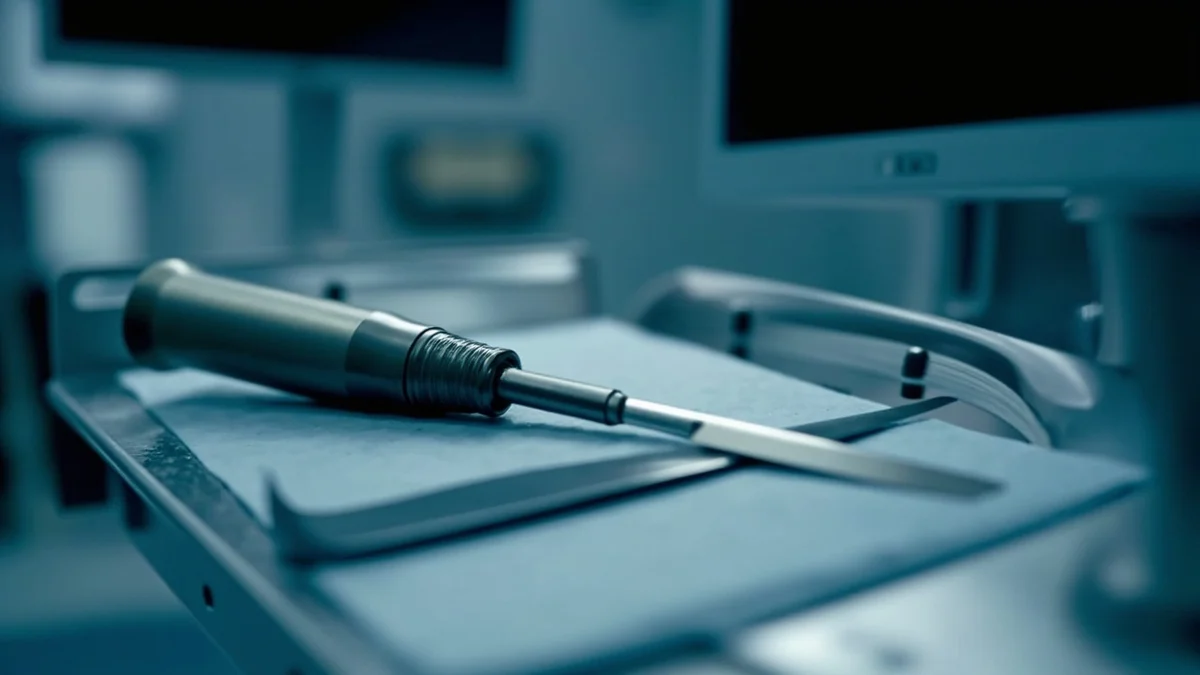
Executive Summary · Procurement Brief
Key Clinical & Commercial Takeaways
- 1Direct Laryngoscopy (Macintosh curved and Miller straight blades) requires mechanically aligning the Oral, Pharyngeal, and Laryngeal axes into a direct line-of-sight vector (~15° field of view), whereas Video Laryngoscopy places a distal micro-CMOS camera near the blade tip to look around the tongue base with a 60°–80° panoramic glottic view.
- 2Under ISO 7376:2020, modern reusable fiber-optic laryngoscopes use the "Green System" universal hook-on fitting—where the LED lamp is housed safely inside the handle and light is transmitted via a removable or integrated glass fiber bundle—allowing the stainless steel blade to be autoclaved at 134°C without bulb failure.
- 3Hyperangulated video laryngoscope blades (60° curvature) convert Cormack-Lehane Grade III/IV airways into Grade I/II views without cervical spine extension, but require a rigid preformed 60° stylet to guide the endotracheal tube around the acute curve.
- 4Every hospital crash cart, emergency department resuscitation bay, and operating theater should pair a primary video laryngoscope (with Macintosh-geometry and Hyperangulated blades) alongside an ISO 7376 Green-Spec fiber-optic direct laryngoscope backup.
Side-by-Side Specification Matrix
Airway Engineering & Clinical Comparison: Conventional Direct vs ISO 7376 Fiber-Optic Green System vs CMOS Video Laryngoscopes
| Technical / Clinical Parameter | Conventional Direct (Bulb-on-Blade) | ISO 7376 Fiber-Optic Direct ("Green System") | CMOS Video Laryngoscope (Standard & Hyperangulated) |
|---|---|---|---|
| Illumination & Optical Architecture | Vacuum/Halogen/LED screw-in bulb exposed on distal blade flange | Handle-mounted 3.5V/2.5V LED + enclosed 4,000-strand glass fiber bundle | Distal HD CMOS camera sensor + dual anti-fog LED array + 3.5"–8" LCD monitor |
| ISO 7376 Hook-On System Standard | "Conventional / Hook-On" (incompatible with Green-System handles) | ISO 7376 "Green System" (marked with green band on handle & blade heel) | Proprietary video blade mount or disposable polycarbonate channel sleeve |
| Glottic Field of View & Line of Sight | ~15° direct keyhole view; requires 3-axis anatomical alignment | ~15° direct keyhole view at 5,000–12,000 lux bright white light | 60° to 80° indirect panoramic camera view; zero neck extension needed |
| First-Pass Success in Difficult Airway (C-L III/IV) | 45% – 62% (limited by anterior larynx, obesity, or C-spine immobilization) | 55% – 70% (superior brightness, but still limited by direct line-of-sight) | 88% – 96% (consistently improves Cormack-Lehane grade by 1 to 2 levels) |
| Sterilization & CSSD Reprocessing | Bulb & electrical contact pin must be unscrewed prior to 134°C autoclave | Integrated fiber-optic AISI 304/316L blade autoclaves intact at 134°C (4,000 cycles) | Single-use sterile blades OR IPX8 submersible blades via OPA / hydrogen peroxide plasma |
| Vulnerability to Blood / Vomitus Fouling | Low — clinician can suction and see past moderate secretions directly | Low — direct optical path remains usable during active suctioning | Moderate — massive hematemesis/vomitus can coat distal camera lens (Standard Mac VL allows direct fallback) |
| Estimated 2026 CapEx (PKR / USD) | PKR 12,500 – 22,000 ($45 – $78) per 4-blade set | PKR 34,000 – 68,000 ($120 – $245) per 4-blade Green-Spec set | PKR 145,000 – 480,000 ($520 – $1,715) handheld / cart system |
1. The 2026 Airway Paradigm: Direct Line-of-Sight vs Distal Camera Optics
Endotracheal intubation in the operating theater, intensive care unit, and emergency trauma bay has undergone a profound technological shift. Under Updated Difficult Airway Society (DAS) and American Society of Anesthesiologists (ASA) guidelines, Video Laryngoscopy (VL) has transitioned from a rescue device locked in the difficult-airway cabinet to the recommended first-line intubation modality for both routine and anticipated difficult airways.
To understand why, consider the anatomical biomechanics of Direct Laryngoscopy (DL). Visualization of the vocal cords with a traditional Macintosh or Miller blade requires placing the patient in the "sniffing position" (35° lower cervical flexion and 15° atlanto-occipital extension) and applying 30 to 45 Newtons of upward-and-forward lifting force along the handle axis to compress the tongue into the submandibular space, aligning the Oral, Pharyngeal, and Laryngeal axes. In patients with cervical spine trauma in a rigid collar, morbid obesity, limited thyromental distance (<6 cm), or Mallampati Class III/IV anatomy, those three axes cannot be mechanically aligned. A Video Laryngoscope bypasses the oral and pharyngeal axes entirely by placing a wide-angle digital CMOS camera 2 to 3 cm behind the blade tip, projecting the glottis onto an HD monitor.
Anesthesiologists and emergency physicians preparing for high-acuity airway shifts can also browse our breathable clinical scrubs and lab coats across /collections, /categories, and /products.
The "See It, Can't Pass It" Hyperangulated Blade Paradox
With a 60° hyperangulated video laryngoscope blade, obtaining a 100% Cormack-Lehane Grade I view of the vocal cords on screen is easy—but passing a soft endotracheal tube around that sharp 60° bend without a rigid preformed stylet will cause the tube tip to hit the anterior tracheal wall. Always shape a rigid stylet to match the exact curvature of the hyperangulated blade, and retract the stylet 3 cm once the ETT tip crosses the vocal cords.
2. Direct Laryngoscopes: Why ISO 7376 "Green System" Fiber-Optics Replaced Bulb-on-Blade
Despite the rise of video laryngoscopy, every crash cart, ambulance, and anesthesia workstation must maintain a rock-solid direct laryngoscope set—both for training and for catastrophic soiled airways (massive upper GI hemorrhage or active regurgitant trauma) where blood clots completely obscure a digital camera lens.
When procuring direct laryngoscopes, hospital biomedical teams must avoid legacy "Conventional / Bulb-on-Blade" sets where a miniature screw-in incandescent bulb is wired through an exposed copper contact pin on the blade hinge. After 15 to 20 autoclave cycles, steam corrosion oxidizes the contact pin, causing the bulb to flicker or extinguish mid-intubation! Instead, mandate ISO 7376:2020 "Green System" Fiber-Optic laryngoscopes (identifiable by a universal green color ring below the handle hook). In a Green System unit, a high-output 2.5V or 3.5V Cree LED lamp sits hermetically sealed inside the knurled battery handle, firing 5,000 to 12,000 lux of cool 5,500K daylight into an encapsulated 4,000+ strand glass fiber-optic light guide welded smoothly inside the AISI 304/316L stainless steel blade.
3. Blade Geometry: Macintosh (Curved) vs Miller (Straight) vs McCoy Flex-Tip
Direct and fiber-optic laryngoscope sets are configured across three primary anatomical blade geometries that every clinic and hospital crash cart must stock in the correct size range:
- Macintosh Curved Blades (Sizes #1, #2, #3, #4): The atraumatic curved tip seats into the vallecula (the pouch between the base of the tongue and the epiglottis), pressing on the hyoepiglottic ligament to indirectly flip the epiglottis upward. Size #3 fits most adult women and men; Size #4 is required for tall/large adults.
- Miller Straight Blades (Sizes #00, #0, #1, #2): Essential for neonates, infants, and young children whose large, floppy, omega-shaped epiglottis and cephalad larynx (at C3–C4) cannot be lifted indirectly via the vallecula. The straight Miller tip passes directly underneath the posterior surface of the epiglottis to lift it directly.
- McCoy Hinged Levering Tip Blades (Sizes #3 & #4): Features a spring-loaded thumb lever along the back of the handle that flexes the distal 25 mm hinged tip of a Macintosh blade upward by 70°, elevating an anterior epiglottis in cervical-collar trauma patients without increasing dental leverage on the maxillary incisors.
4. Video Laryngoscope Architectures: Macintosh-Geometry, Hyperangulated & Channeled
Modern video laryngoscopes divide into three distinct blade profiles. First, Standard Macintosh-Geometry Video Blades preserve the familiar 30° curve of a traditional Mac #3/#4 blade while adding a distal camera. Their decisive advantage is dual capability: a resident or anesthetist can perform direct eyeball laryngoscopy while the attending supervisor watches the HD monitor, and if secretions obscure the camera, the blade immediately functions as a standard direct laryngoscope.
Second, Hyperangulated Video Blades incorporate an acute 60° curve that follows the anatomical contour of the tongue without compressing soft tissue, making them the gold standard for ankylosing spondylitis, cervical spine immobilization, and morbidly obese patients. Third, Channeled Video Blades (such as Airtraq-class or King Vision channeled blades) integrate a lateral guide tunnel that pre-loads the endotracheal tube and steers it directly toward the glottic target without a separate stylet.
5. Anti-Fog Optics, Battery Management & Spaulding Semi-Critical Reprocessing
Because a laryngoscope blade contacts intact mucous membranes of the oropharynx (and frequently trace blood), the Spaulding Classification categorizes both blades and handles as Semi-Critical medical devices requiring, at minimum, High-Level Disinfection (HLD) or steam sterilization between every single patient. Wiping a used laryngoscope blade or knurled handle with an alcohol swab does NOT inactivate HBV, HSV, mycobacteria, or bacterial spores.
When evaluating video laryngoscope tenders, verify that the camera tip includes active resistive anti-fog heating (reaching 40°C within 3 seconds of power-on so warm exhaled breath does not fog the lens) and confirm whether the blades are sterile single-use polycarbonate sleeves or IPX8 fully immersible reusable titanium/stainless blades validated for ortho-phthalaldehyde (OPA), peracetic acid, or low-temperature hydrogen peroxide plasma sterilization.
6. Crash Cart Airway Audit Checklist & Clinical Staff Readiness
A complete hospital airway resuscitation module should contain: (1) a handheld or cart-mounted CMOS Video Laryngoscope with Mac #3/#4 and Hyperangulated blades plus rigid stylets, (2) an ISO 7376 Green-System Fiber-Optic handle with Miller #0, #1 and Macintosh #2, #3, #4 autoclavable blades, (3) a 15 Fr gum-elastic Bougie tracheal tube introducer, (4) second-generation Supraglottic Airway Devices (i-gel or LMA Supreme sizes 3, 4, 5), and (5) cuffed endotracheal tubes (sizes 6.0 to 8.5 mm ID) with a manometer.
Equip your anesthesia, ICU, and emergency department teams with precision-finished clinical apparel built for high-stakes shifts: explore /collections, browse /categories and /products (including the Zeruvmed Timeless Button Wrap Scrub Set and Navy Blue Scrub Set), and complete your institutional purchase at /checkout.
From a health-economics and sustainability standpoint, high-volume operating theaters (>1,500 intubations/year) achieve the lowest 5-year cost per intubation by procuring a dual-modality Video Laryngoscope platform that accepts both reusable IPX8 autoclavable/HLD titanium Macintosh blades for routine cases and sterile single-use hyperangulated polycarbonate blades for difficult or infectious airways—paired with an ISO 7376 Green-System fiber-optic set in every emergency drawer.
Routine daily crash-cart checks should verify both the CMOS video laryngoscope battery charge percentage (>80%) and the illuminance output of the backup ISO 7376 Green-System fiber-optic handle so emergency airway teams never face equipment downtime during rapid-sequence induction.
Standardizing both CMOS video laryngoscopy and ISO 7376 Green-System fiber-optic direct blades across every anesthesia workroom, ICU bed, and emergency crash cart ensures immediate first-pass airway success in any clinical scenario.
Direct Storefront Integration
Recommended Clinical Workwear & Institutional Ordering
Standardize staff barrier protection and clinical uniforms alongside your biomedical equipment procurement.
Shop Anesthesia & ER Collections
Explore breathable, antimicrobial clinical scrubs and barrier lab coats for airway teams.
All Storefront Categories
Navigate Women, Men, Lab Coats, and Premium designer clinical apparel.
Browse All Products
View all 21 clinical scrub sets and white consultation coats.
Timeless Button Wrap Scrub Set
Premium midnight-navy tailored scrub set for senior clinicians and anesthesiologists.
Complete Order at Checkout
Direct clinic and hospital checkout with nationwide delivery across Pakistan.
Clinical Audit & Purchasing Q&A
Frequently Asked Questions
Are ISO 7376 "Green System" fiber-optic blades compatible with conventional laryngoscope handles?
No. Under ISO 7376:2020, "Green System" fiber-optic handles house the LED lamp inside the handle top and have a different hinge-pin geometry than legacy "Conventional" handles (which supply electrical voltage to a bulb screwed into the blade). Always check for the green color band on both the handle collar and the blade heel before purchasing replacement blades.
Why do we use a straight Miller blade instead of a curved Macintosh blade in infants and neonates?
In neonates and infants under 2 years old, the larynx sits higher in the neck (at C3–C4 rather than C5–C6), the tongue is disproportionately large relative to the oral cavity, and the epiglottis is long, floppy, and omega-shaped (Ω). A curved Macintosh blade placed in the tiny infant vallecula often fails to elevate the floppy epiglottis, whereas a straight Miller #0 or #1 blade passes beneath the epiglottis to lift it directly out of the glottic axis.
Can fiber-optic laryngoscope blades be sterilized in a 134°C Class B steam autoclave?
Yes—provided you purchase encapsulated/integrated ISO 7376 Green-System blades rated for 134°C pre-vacuum steam sterilization (up to 4,000 cycles). However, never clean fiber-optic blades inside an ultrasonic cleaner (40 kHz cavitation shatters the microscopic glass optical fibers), and never autoclave the battery handle unless its LED cartridge and battery core have been removed per the manufacturer IFU.
Why does endotracheal tube passage sometimes fail even when the Video Laryngoscope shows a perfect vocal cord view?
This is the classic "good view, difficult tube delivery" phenomenon of hyperangulated (60°) video blades. Because the oral-pharyngeal-laryngeal axes have not been flattened, the endotracheal tube must navigate a steep 60° anterior turn to reach the glottis and then angle posteriorly to enter the trachea. Using a rigid stylet bent to 60° and popping the stylet back 3–4 cm as the tube tip passes the vocal cords solves the anterior tracheal wall impingement.
Should laryngoscope handles be disinfected between patients even if they did not touch the patient's mouth?
Yes. Clinical microbiology studies demonstrate that over 75% of laryngoscope handles in operating rooms and crash carts harbor occult blood, Staphylococcus aureus, or Gram-negative bacteria transferred from the clinician's gloved hand or when the blade folds closed against the handle barrel after extubation. Both the blade and handle must be decontaminated after every single use.
Continue Reading
Related Clinical Procurement Guides
Multiparameter Patient Monitors Buying Guide
Compare 3-parameter vital signs spot-check monitors, 5-parameter bedside ICU monitors, and modular OR anesthesia monitors across 5-lead ECG, motion-tolerant SpO2, IBP, and EtCO2 capnography.
Medical Clinic Setup & Diagnostic Checklist
Complete 2026 room-by-room biomedical equipment, diagnostic instrumentation, crash cart, and clinical apparel checklist for launching a compliant outpatient medical clinic or polyclinic.
Class B vs Class N vs Class S Autoclaves
Compare EN 13060 Class B fractionated pre-vacuum, Class S intermediate, and Class N gravity displacement autoclaves across hollow lumen penetration, Bowie-Dick testing, and 5-year clinic TCO.