
Class B vs Class N vs Class S Autoclaves (2026): Complete Clinical Sterilization Buying Guide
Compare EN 13060 Class B fractionated pre-vacuum, Class S intermediate, and Class N gravity displacement autoclaves across hollow lumen penetration, Bowie-Dick testing, and 5-year clinic TCO.
ZeruvMed Clinical Procurement Desk · CSSD & Biomedical Sterilization Standards Group
EN 13060 · ISO 17665-1 · NHS HTM 01-01 Compliance Advisory · Published 2026-01-15 · Reviewed & Updated 2026-10-15
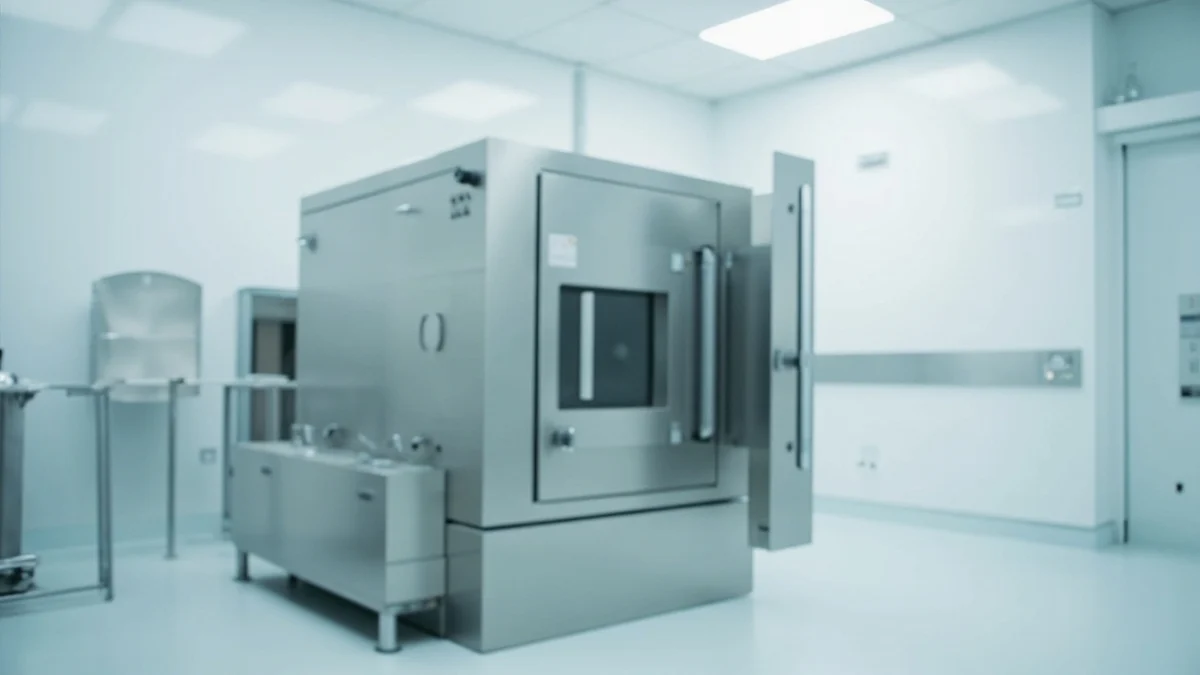
Executive Summary · Procurement Brief
Key Clinical & Commercial Takeaways
- 1Class B benchtop sterilizers utilize a fractionated pre-vacuum pump (3 pulses down to -0.80 bar) to evacuate air from Type A and Type B hollow lumens, surgical cassettes, and porous textile loads before saturated steam injection.
- 2Class N gravity displacement autoclaves are strictly restricted by EN 13060 and NHS HTM 01-01 to unwrapped, solid, non-lumened instruments used immediately at point of care; using Class N units for pouched instruments violates sterility assurance protocols.
- 3Class S sterilizers bridge specific single-vacuum or active-drying workflows defined by the manufacturer, making them viable only when validated against the exact instrument load profile of the outpatient clinic.
- 4Daily Helix PCD (Process Challenge Device) and Bowie-Dick steam penetration tests are mandatory for Class B units processing dental handpieces, arthroscopic cannulas, and reusable surgical packs.
Side-by-Side Specification Matrix
Technical & Regulatory Comparison: EN 13060 Class B vs Class S vs Class N Steam Autoclaves
| Parameter / Standard | Class B (Fractionated Pre-Vacuum) | Class S (Manufacturer-Specified) | Class N (Gravity Displacement) |
|---|---|---|---|
| Air Removal Mechanism | 3-pulse fractionated mechanical vacuum pump (-0.80 to -0.90 bar) | Single vacuum pulse or positive-pressure steam flush cycles | Passive gravity displacement via upward cold-air venting |
| Permitted Load Types (EN 13060) | Wrapped, unwrapped, porous textiles, Type A & Type B narrow hollow lumens | Solid wrapped instruments, simple Type B single-ended lumens (if validated) | Strictly unwrapped solid instruments only; zero hollow lumens or pouches |
| Drying Phase Architecture | Closed-door post-vacuum drying with 0.22 µm HEPA-filtered air break (<0.2% residual moisture) | Assisted thermal or single-stage vacuum drying (<1.0% residual moisture) | Passive radiant chamber heat (frequently requires open-door venting) |
| Mandatory Validation Tests | Vacuum leak test (<1.3 mbar/min), Bowie-Dick porous test, Helix 1.5m PCD | Manufacturer-specified chemical indicator & biological spore challenge | Thermocouple temperature verification & Class 4/5 internal indicators |
| Standard Sterilization Hold | 134°C at 2.1 bar for 3.5–4.0 min (18 min Prion cycle) or 121°C at 1.1 bar for 15–20 min | 134°C at 2.1 bar for 4–7 min or 121°C at 1.1 bar for 20 min | 134°C at 2.1 bar for 3–6 min or 121°C at 1.1 bar for 15–30 min |
| Typical Chamber Volume & Power | 18L, 23L, or 45L · 2.2–3.2 kW · USB/Ethernet digital cycle logger | 16L to 24L · 1.8–2.4 kW · Thermal printer or SD card log | 12L to 18L · 1.5–1.8 kW · Basic LED display without vacuum pump |
| Estimated 2026 CapEx (PKR / USD) | PKR 480,000 – 950,000 ($1,700 – $3,400) | PKR 310,000 – 520,000 ($1,100 – $1,850) | PKR 145,000 – 260,000 ($520 – $930) |
1. Understanding the EN 13060 Small Steam Sterilizer Classification
For outpatient surgical centers, dental implantology practices, dermatology clinics, and hospital satellite CSSD (Central Sterile Supply Department) units, selecting a benchtop steam autoclave is one of the highest-stakes capital equipment decisions in infection control. Under European Standard EN 13060 (Small Steam Sterilizers, chamber volume under 60 liters, less than one sterilization unit STU), autoclaves are divided into three strict operational classes: Class B, Class S, and Class N. Unlike legacy marketing terminology that labeled sterilizers as "automatic" or "semi-automatic," EN 13060 classifies autoclaves by how effectively they evacuate residual air pockets from complex geometries before saturated steam condensation occurs.
Air is the primary physical barrier to steam sterilization. Because air is an thermal insulator with a lower density profile than pressurized steam under turbulent injection, any residual air trapped inside a surgical instrument box lock, a dental high-speed turbine handpiece, or a multi-layer sterilization pouch creates a cold spot where the target temperature of 134°C cannot be sustained with saturated moisture. Without phase-change condensation directly on the stainless steel surface, bacterial endospores such as Geobacillus stearothermophilus survive the exposure phase intact.
Hospital procurement committees and clinical directors auditing their CSSD workflow alongside protective clinical workwear in our /collections and /categories catalog must match autoclave class directly to the most complex instrument processed in the facility—never the average load.
Regulatory Compliance Mandate (NHS HTM 01-01 & ISO 17665-1)
Any instrument sterilized inside a sealed paper-film pouch (EN 868-5) for post-cycle shelf storage requires active vacuum air removal and closed-door vacuum drying. Processing pouched instruments in a Class N gravity autoclave results in wet packs, compromised sterile barriers, and immediate regulatory audit failure.
2. Class B Autoclaves: Fractionated Pre-Vacuum Engineering & Helix Testing
The letter "B" in Class B stands for "Big" (representing the capability of hospital-scale large steam sterilizers conforming to EN 285 compressed into a benchtop footprint). A Class B autoclave incorporates a high-torque rotary vane or diaphragm vacuum pump that executes three to four alternating negative-pressure evacuation pulses (-0.80 to -0.85 bar) interspersed with positive-pressure steam injections (+0.50 to +0.80 bar) prior to the sterilization plateau. This fractionated pre-vacuum sequence strips more than 99.9% of ambient air from microscopic crevices, porous surgical drapes, and narrow lumens.
Under EN 13060, Class B sterilizers are the only benchtop units certified to process both Type A hollow loads (narrow, long lumens such as laparoscopic trocars, suction cannulas, and dental handpiece turbines with length-to-diameter ratios up to 750:1) and Type B hollow loads (wider or single-ended hollow instruments). Once the 134°C (2.1 bar) holding phase completes—typically 3.5 to 4.0 minutes for standard loads or 18 minutes for Creutzfeldt-Jakob Disease (CJD) prion inactivation—the vacuum pump engages again to lower the boiling point of water inside the chamber. Residual moisture flashes into vapor and is evacuated, followed by air equalization through a 0.22-micron bacterial-retentive HEPA filter.
- Type A Hollow Load Certification: Validated via the 1.5-meter PTFE Helix Process Challenge Device (PCD) with a 2 mm internal lumen diameter and a terminal Class 2 chemical indicator strip.
- Porous Textile & Drape Compatibility: Validated via the Bowie-Dick test pack at 134°C for 3.5 minutes to confirm rapid, uniform steam penetration into folded cotton/poly-cotton surgical packs and lab textiles.
- Closed-Door HEPA Post-Vacuum Drying: Guarantees residual moisture below 0.2% for metal loads and below 1.0% for textile packs, preserving the microbial barrier of EN 868-5 pouches for up to 180 days.
3. Class N Autoclaves: Gravity Displacement Physics & Clinical Boundaries
The letter "N" in Class N denotes "Naked solid products." A Class N sterilizer contains no mechanical vacuum pump. Instead, an internal heating element or steam generator boils deionized water at the bottom or rear of the pressure vessel. As steam rises to the top of the chamber, it gradually pushes heavier, cooler ambient air downward through a thermostatic air-vent valve. Once the vent sensor detects steam at a preset temperature threshold, the valve closes and chamber pressure builds to 1.1 bar (121°C) or 2.1 bar (134°C).
Because gravity displacement relies entirely on passive buoyancy differences between steam and air, it cannot extract air from dead-end tubes, serrated hemostat ratchets that are locked closed, wrapped instrument cassettes, or sealed peel pouches. Furthermore, at the end of the sterilization hold, a Class N unit lacks a vacuum pump to evaporate condensate. Operators are often forced to crack the autoclave door open to let steam escape—exposing wet instruments to unsterile room air and aerosols.
Consequently, Class N units should only be procured as secondary flash/immediate-use sterilizers for solid, unwrapped stainless steel instruments (such as basic examination specula or solid scalpel handles) that will be transported directly in a covered tray to the procedure chair within minutes.
4. Class S Autoclaves: When Specified-Cycle Units Make Sense
Class S ("Specified") autoclaves occupy the engineering middle ground between Class N and Class B. Rather than meeting the universal EN 13060 Type A hollow-load benchmark, a Class S manufacturer defines the exact load permutations—such as wrapped solid instruments, single-layer pouches, or specific Type B wider lumens—that their proprietary cycle can sterilize. Many Class S autoclaves employ a single pre-vacuum pulse or a pulsed positive-pressure steam-flush pressure-pulse (SFPP) system coupled with a closed-door vacuum drying pump.
In dermatology, ophthalmology, and podiatry clinics where instruments are predominantly solid micro-forceps, scissors, and needle holders packaged in single peel pouches—and where narrow multi-channel hollow turbines are never used—a Class S sterilizer with active vacuum drying can reduce capital expenditure by 25% to 35% compared to a Class B unit. However, if the clinic later adds hollow suction cannulas or implant handpieces, the Class S unit cannot be legally upgraded to Class B compliance.
5. Feedwater Conductivity (µS/cm), Chamber Metallurgy & Cycle Logging
Nearly 68% of premature benchtop autoclave failures in South Asian and Middle Eastern clinics trace back to poor feedwater quality rather than electronic failure. EN 13060 Annex C mandates that steam sterilizer feedwater created via reverse osmosis (RO) or distillation maintain an electrical conductivity below 15 µS/cm (and ideally below 5 µS/cm), total dissolved solids (TDS) under 10 mg/L, and chloride concentration below 2 mg/L. Tap water or unfiltered mineral water deposits calcium carbonate scale inside electro-valves and steam generators while releasing chloride ions that pit both the 316L stainless steel chamber wall and the surgical instruments inside.
Modern Class B autoclaves integrate an inline conductivity sensor inside the clean-water reservoir that automatically locks out cycle initiation if water conductivity exceeds 15 µS/cm. When evaluating supplier quotations, biomedical engineers should verify five mandatory hardware specifications before issuing a purchase order:
- One-Piece Deep-Drawn 316L Stainless Chamber: Minimum 2.5 mm wall thickness electropolished to Ra < 0.4 µm to prevent biofilm adhesion and intergranular chloride corrosion.
- Dual-Tank Separation (Clean vs Waste Water): Single-loop recycled water autoclaves concentrate endotoxins, lubricants, and metallic ions across cycles; insist on strict single-use steam generation.
- Independent PT1000 Temperature & Piezo Pressure Sensors: Dual-processor cross-verification ensures that temperature and pressure correlate to the saturated steam curve within ±0.5°C.
- Digital Audit Trail (USB / Ethernet / Thermal Printer): Automated logging of cycle number, operator ID, vacuum depth, plateau temperature/pressure every 2 seconds, and pass/fail status for regulatory inspection.
6. Five-Year Total Cost of Ownership (TCO) & Clinic Sizing Matrix
When sizing chamber capacity, procurement leads must account for tray footprint and daily patient throughput rather than raw liter volume alone. An 18-liter chamber accommodates three standard trays (approx. 180 × 280 mm) and processes up to 4.5 kg of solid instruments or 1.5 kg of porous textiles per 42-minute cycle. A 23-liter chamber extends tray depth to 380–400 mm, accommodating full-length surgical instrument cassettes and orthopedic osteotomes while increasing load capacity to 6.0 kg of instruments per cycle.
Over a 5-year lifecycle (assuming 4 cycles per day, 300 operating days per year = 6,000 cycles), a 23L Class B autoclave consumes approximately PKR 45,000/year in distilled water, HEPA filters, silicone door gaskets (replaced every 800–1,000 cycles), and annual thermocouple calibration. Clinics outfitting their sterilization room should simultaneously standardize staff protective barriers—including fluid-repellent lab coats from /collections/lab-coats such as the Women's Classic White Lab Coat and Men's Classic White Lab Coat, plus antimicrobial scrub sets in /collections/women and /collections/men—and complete bulk department orders via /checkout.
Direct Storefront Integration
Recommended Clinical Workwear & Institutional Ordering
Standardize staff barrier protection and clinical uniforms alongside your biomedical equipment procurement.
Browse All Clinical Collections
Explore precision-finished clinical scrubs, lab coats, and protective healthcare workwear.
Catalog Categories Overview
Navigate all ZeruvMed clinical apparel and institutional department categories.
Full Product Catalog
View all 21 clinical apparel and barrier lab coat SKUs ready for hospital dispatch.
Women's Classic White Lab Coat
Fluid-resistant twill barrier lab coat for CSSD, pathology, and outpatient sterilization staff.
Institutional & Clinic Checkout
Complete clinic procurement with card, bank transfer, or cash on delivery across Pakistan.
Clinical Audit & Purchasing Q&A
Frequently Asked Questions
Can a Class N autoclave be used to sterilize instruments inside sealed sterilization pouches?
No. Under EN 13060 and NHS HTM 01-01 guidelines, Class N gravity displacement sterilizers lack a pre-vacuum pump to evacuate air from inside a sealed EN 868-5 pouch and lack a post-vacuum drying phase. Attempting to sterilize pouched instruments in a Class N unit traps air pockets during the hold phase and leaves condensed moisture on the paper backing afterward, invalidating barrier sterility.
How often must Bowie-Dick and Helix tests be performed on a Class B autoclave?
An automatic vacuum leak rate test should be run weekly (verifying pressure rise stays below 1.3 mbar/minute over 10 minutes), while a Helix Process Challenge Device (PCD) test for hollow instruments or a Bowie-Dick steam penetration test for porous loads must be executed daily after the warm-up cycle before processing clinical loads.
What is the difference between the 134°C and 121°C sterilization cycles?
The 134°C cycle at 2.1 bar gauge pressure requires only a 3.5 to 4.0 minute sterilization hold (or 18 minutes for Prion protocols) and is the standard for stainless steel surgical instruments, dental handpieces, and high-temperature textiles. The 121°C cycle at 1.1 bar requires a 15 to 20 minute hold and is reserved for heat-sensitive plastics, silicone tubing, rubber components, and specific glass items.
What water conductivity level is required for Class B steam sterilizers?
EN 13060 specifies demineralized or distilled water with an electrical conductivity below 15 µS/cm (and below 5 µS/cm for optimal steam generator longevity). Using tap water or drinking mineral water causes lime-scale blockages in solenoid valves and chloride-induced pitting corrosion on surgical instruments.
How do I choose between an 18L and a 23L benchtop Class B autoclave?
Choose a 23-liter autoclave if your clinic uses standard 5-instrument or 10-instrument dental/surgical cassettes, long gynecological or orthopedic instruments (>28 cm), or runs more than 15 patient procedures daily. An 18-liter unit is sufficient for compact 2-chair dental practices or dermatology suites using short individual pouches.
Continue Reading
Related Clinical Procurement Guides
Sterilization Pouches & Class 1–6 Indicators
Complete clinical guide to ISO 11140-1 Chemical Indicators (Type 1 to Type 6), EN 868-5 medical peel pouches, biological spore testing (ISO 11138), and event-related sterile shelf life.
Disposable vs Reusable Surgical Instruments
Analyze the 5-year Total Cost of Ownership (TCO), CSSD reprocessing labor, surgical site infection (SSI) risk, and hybrid kit strategies for disposable vs reusable surgical instruments.

Surgical Stainless Steel: 420 vs 304 vs 316L
Master surgical metallurgy under ISO 7153-1 and ASTM F899: compare martensitic AISI 420/440C vs austenitic 304 and 316L stainless steel across Rockwell hardness, passivation, and pitting resistance.